// Hyperstable Smart Optomechanics
Precision
Mirror Mounts
That Stay
Aligned
Monolithic flexure construction minimizes mechanical stiction, backlash, and hysteresis — giving you stable optical alignment through thermal cycles and long experiments.
See How It Handles Thermal Drift
Thermal cycling reveals whether a mount returns to the same alignment or develops a new rest position. Our monolithic flexure architecture is designed to minimize mechanical hysteresis and preserve alignment through repeated temperature cycles.
Built for
Precision
Experiments
Physiverse develops precision optomechanics for experiments where mechanical drift and alignment stability matter. Our monolithic mounts combine precision-machined flexures, high-resolution actuation, and open software control.
Sub-µrad Stability
Sub-microradian angular stability over thermal cycles and time. Set the alignment once — the mount holds it.
Configurable Variants
Multiple aperture sizes, manual or motorized actuation, and vacuum/cryo-compatible builds. Spec a mount to your application.
Monolithic Flexures
Single-body construction with integrated flexure pivots eliminates slippage and stiction from multi-part assemblies — preserving repeatability and minimizing drift.
Open Interface
Full API access and SDK for seamless integration with existing lab automation workflows.
Why
Monolithic
Flexures?
Conventional optical mounts rely on multiple contacting components, which can introduce stiction, backlash, creep, and hysteresis. A monolithic mount integrates the flexure mechanism into a single machined body, reducing the number of mechanical interfaces that can change the optical alignment.
The result is a mechanically constrained optical platform designed for repeatable alignment and low long-term drift.
Our Instruments
Two platforms. One philosophy: stability without compromise.
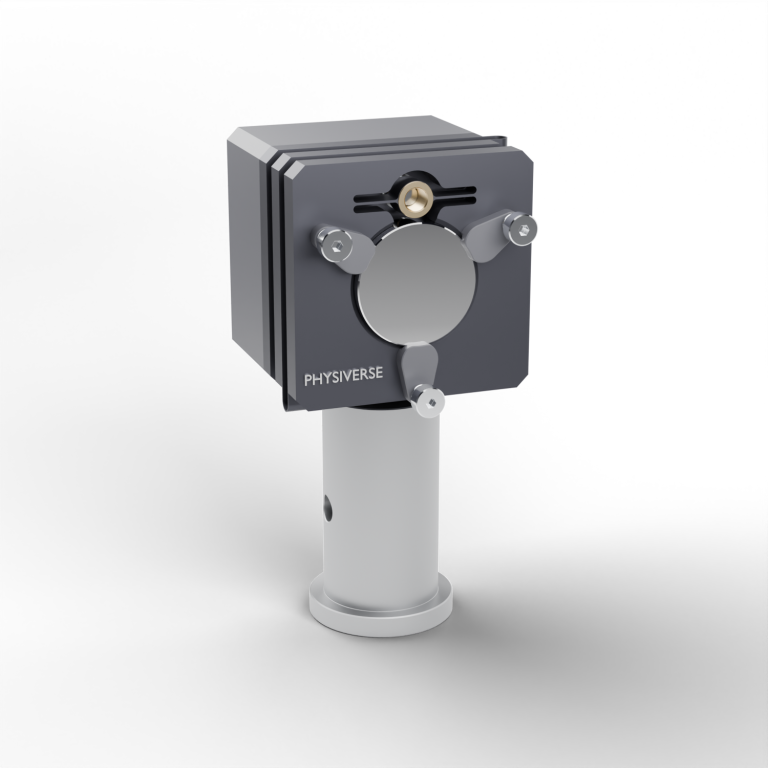
Motorized Monolithic Mirror Mount
Closed-loop motorized alignment with <1 µrad/step resolution, Wi-Fi control, and an open-source Python API. Designed for remote and automated optical alignment.
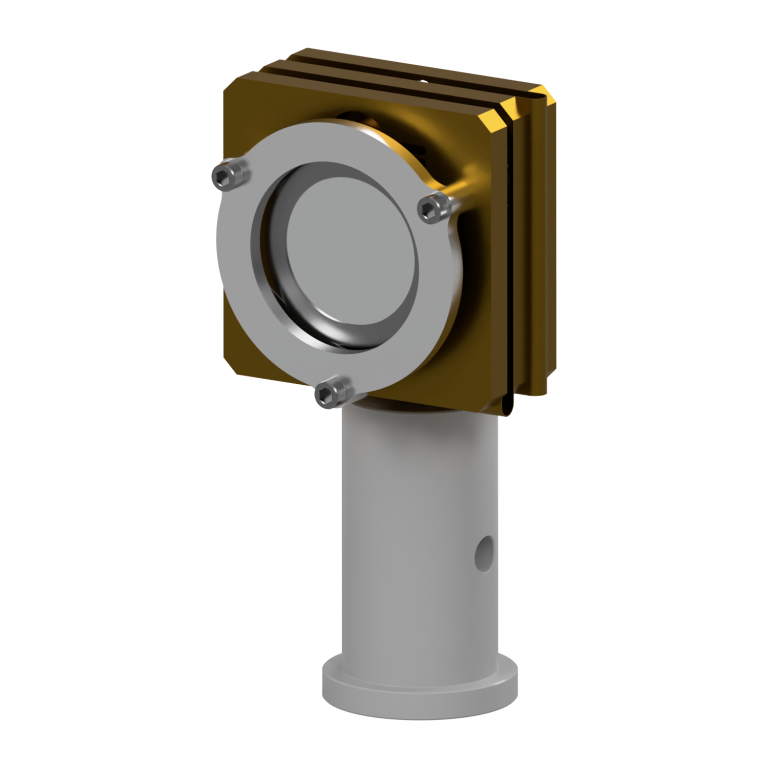
Manual Monolithic Mirror Mount
A precision manual mirror mount machined from a single monolithic body. The flexure architecture minimizes mechanical stiction and backlash, providing repeatable optical alignment with low thermal drift.
Let's Build
Something
Precise
Whether you need a standard configuration or a fully custom optomechanical platform, our team of physicists and engineers will work directly with you.